
Restore Lost Jawbone and Open the Door to Implants
A healthy jawbone holds your teeth in place, supports the shape of your face, and gives dental implants something solid to anchor into. When gum disease, missing teeth, an injury, or years of wearing dentures cause that bone to shrink, bone grafting can rebuild it. At LA Dentists Group in Glendale, CA , our prosthodontic and implant dentists use proven grafting techniques to restore the height, width, and density of your jaw so you can move forward with confidence. Call 818-242-4046 to find out whether bone grafting is the right first step for you.
request an appointmentWhat Is Dental Bone Grafting?
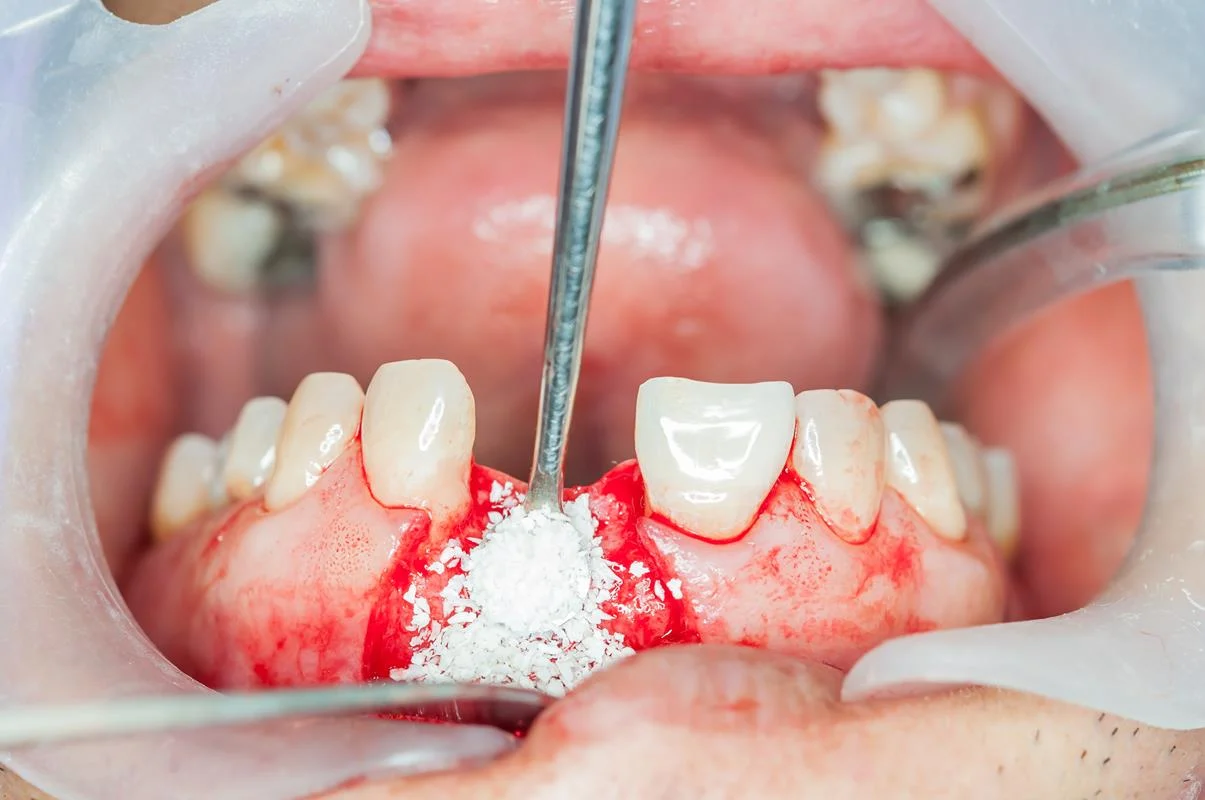
Dental bone grafting adds bone or bone-like material to areas of the jaw that have become too thin, soft, or uneven. The graft acts as a framework. Over the following months, your body grows its own new bone into that framework and gradually replaces the graft material, leaving you with stronger, fuller bone where it was missing.
Many patients first hear about bone grafting when they ask about dental implants and learn there isn’t enough bone to hold an implant securely. Grafting solves that problem. With a rebuilt foundation, implants can be placed in the right position and are better able to handle the forces of chewing for many years.
Why the Jawbone Shrinks
Your jawbone stays dense because tooth roots stimulate it each time you bite and chew. When a tooth is lost, the bone in that spot no longer receives that signal and slowly begins to resorb. Infection and inflammation can also break bone down directly. Common causes of jawbone loss include:
- Advanced periodontal disease that destroys the bone around teeth
- Missing teeth that were never replaced
- Deep decay or infection that spreads into the surrounding bone
- Injuries to the face, mouth, or teeth
- Wearing dentures for many years without implant support
- Genetics, aging, and certain health conditions
Bone loss is gradual, so many people don’t notice it until teeth start to shift, dentures stop fitting well, or the lower face begins to look sunken. Treating gum disease early and replacing missing teeth promptly are two of the best ways to protect the bone you have.
Signs You May Benefit From a Bone Graft
Bone grafting may be recommended if you:
- Want dental implants but have been told you lack enough bone
- Are having a tooth removed and plan to replace it with an implant later
- Have bone loss around teeth from gum disease
- Notice dentures becoming loose as your jaw changes shape
- Have a visible dip or indentation in the gums where a tooth used to be
At your consultation, your dentist reviews your health history, examines your mouth, and uses dental imaging to measure the height and width of your jawbone. We then talk through your goals and explain exactly what your treatment would involve.
Types of Bone Grafting We Offer
The right approach depends on where bone is needed and how much is missing. Graft material may come from your own body, a tissue bank, animal sources, or biocompatible synthetic materials. Your dentist recommends the option best suited to your situation.
- Socket preservation: Graft material is placed in the socket right after a tooth extraction to keep the bone from collapsing and preserve the site for a future implant.
- Ridge augmentation: Bone is added along the jaw ridge to restore width or height lost after teeth have been missing for some time.
- Sinus lift: In the upper back jaw, sinus bone augmentation gently raises the sinus floor and adds bone beneath it so implants can be placed safely.
What to Expect During Treatment
Bone grafting is typically performed under local anesthesia, so the area is completely numb while we work. If dental visits make you anxious, sedation dentistry can help you feel calm and comfortable. Your dentist places the graft material, protects it as needed, and closes the area so healing can begin.
Depending on your bone quality, an implant may be placed during the same appointment as the graft. In other cases, the graft is allowed to heal and mature first, and the implant is placed once the new bone is strong enough to support it. We’ll explain which approach fits your case before treatment begins.
Healing and Recovery
Mild swelling, tenderness, and minor bruising are normal for the first few days. Most patients manage comfortably with over-the-counter pain relievers, cold compresses, and a soft-food diet. We send you home with clear aftercare instructions and check in at follow-up visits to make sure the site is healing well.
The gums usually heal within a couple of weeks, while the graft continues to mature over several months. Once your new bone is ready, you can move on to the next stage of care, whether that’s a single implant, an implant-supported bridge, or a full-arch restoration.
Questions Patients Ask About Bone Grafting
Does a dental bone graft hurt?
You should not feel pain during the procedure because the area is fully numbed with local anesthesia, and sedation is available if you feel nervous. Afterward, most patients have mild soreness and swelling for a few days that is easily controlled with over-the-counter medication and cold compresses.
How long does a bone graft take to heal?
The gum tissue typically heals in one to two weeks. The graft itself usually takes several months to fully integrate with your natural bone. The exact timeline depends on the size and location of the graft and your overall health.
Will I definitely need a bone graft before getting implants?
No. Many patients have enough healthy bone for implants without grafting. If your exam and imaging show the bone is too thin or soft to hold an implant securely, a graft rebuilds the area first so the implant has a stable foundation.
What is bone graft material made of?
Graft material may come from your own bone, a tissue bank, animal sources, or biocompatible synthetic materials. Each option is safe and serves as a framework for your body to grow new bone. Your dentist recommends the best choice for your needs.
Can a bone graft be placed when a tooth is removed?
Yes. Socket preservation grafting is often done immediately after an extraction. Filling the empty socket helps prevent the bone from shrinking and keeps the site ready for a future dental implant.
What can I eat after bone grafting?
For the first several days, choose soft, cool, or lukewarm foods such as yogurt, smoothies, scrambled eggs, mashed potatoes, and soups. Avoid hard, crunchy, or very hot foods and skip straws, since suction can disturb the healing site.
How can I help my bone graft succeed?
Dental bone grafts have a high success rate. You can support healing by following your aftercare instructions, avoiding smoking, keeping the area clean, and attending your follow-up visits so our team can monitor your progress.
Take the First Step Toward a Stronger Smile
Bone loss doesn’t have to keep you from the smile you want. The team at LA Dentists Group will evaluate your jawbone, walk you through your options, and build a plan that sets you up for lasting results. Call 818-242-4046 or request your consultation online today.