

Rebuilding the Upper Jaw So Your Implant Can Last
Losing upper back teeth often leaves too little bone beneath the sinus to hold a dental implant securely. Sinus bone augmentation, commonly called a sinus lift, restores that missing height so your new tooth has a strong, stable base. At LA Dentists Group in Glendale, CA , our dentists, prosthodontist and surgical team plan your sinus lift, implant and final restoration together, giving patients across Glendale and greater Los Angeles a predictable path to a complete, confident smile.
request an appointmentUnderstanding Sinus Bone Augmentation
The maxillary sinuses are air-filled spaces that sit just above the roots of your upper premolars and molars. When those teeth are lost, two things tend to happen at once: the jawbone that once surrounded the roots begins to shrink, and the sinus cavity gradually expands downward into the space. Over time, the layer of bone between your mouth and your sinus can become too thin to anchor an implant.
During a sinus lift, our team gently raises the thin membrane lining the floor of the sinus and places bone graft material in the space beneath it. Over the following months, your body grows new bone that blends with the graft, creating the vertical height an implant needs. Once that bone matures, we can place dental implants that fuse with the jaw and support a natural-looking crown, bridge or denture.
Graft Materials We May Use
The right graft material depends on how much bone you need, your medical history and your personal preferences. Options include:
- Autograft: a small amount of your own bone, typically taken from another area of the mouth
- Allograft: carefully processed and sterilized donor bone
- Xenograft: purified bone mineral of animal origin, most often bovine
- Synthetic grafts: biocompatible materials designed to encourage natural bone growth
Every option serves as a framework. Your own bone cells move into the graft, gradually replacing it with healthy, living bone that can bear the forces of chewing.
Signs You May Need a Sinus Lift
Not everyone replacing an upper tooth needs augmentation. At your consultation, we use digital X-rays and 3D imaging to measure bone height and density, check the position of the sinus and review nearby tooth roots. A sinus lift is often recommended when:
- Upper back teeth have been missing long enough for the jawbone to recede
- Periodontal disease has destroyed bone around the upper molars or premolars
- A traumatic injury or difficult extraction damaged the surrounding bone
- Your sinus naturally sits low or has enlarged over the years
- A previous implant failed because there was not enough bone to support it
If bone loss affects other parts of your mouth, such as the front of the jaw or the lower arch, our team also provides ridge and socket bone grafting to prepare those areas for implants.
Two Approaches to Lifting the Sinus
We choose the technique that best matches the amount of bone you already have:
- Lateral window technique: A small access window is created on the side of the upper jaw. The sinus membrane is lifted and graft material is packed beneath it. This approach is ideal when a significant amount of new bone is needed.
- Crestal (internal) technique: The sinus floor is gently raised from below, through the same opening where the implant will sit. This more conservative option works when only a modest gain in height is needed, and the implant can often be placed during the same visit.
Local anesthesia keeps the area completely numb. For patients who feel nervous about oral surgery, we also offer sedation dentistry to help you stay calm and comfortable. Most procedures take between one and two hours, depending on the number of sites being treated.
Getting Ready for Your Procedure
We provide personalized pre-operative instructions after reviewing your health history. Typical preparation includes:
- Quitting or pausing smoking to support healing and graft success
- Adjusting certain medications only as directed by our team and your physician
- Avoiding supplements that can increase bleeding
- Fasting beforehand if you are receiving deeper sedation
- Arranging a ride home and wearing comfortable clothing
What Recovery Looks Like
Mild swelling, tenderness and some nasal stuffiness are common for the first few days. To protect the graft and the sinus membrane, avoid blowing your nose, sneezing with your mouth closed, drinking through a straw and smoking during early healing. Soft foods, cold compresses and the medications we recommend help most patients get back to their usual routine within a few days.
The graft generally needs four to nine months to develop into solid bone. Once it has matured, we place your implant. After the implant bonds with the jaw, we attach your custom crown, bridge or denture. Attending your follow-up visits and following aftercare guidance closely gives you the best chance of a long-lasting result.
Why Patients Trust LA Dentists Group
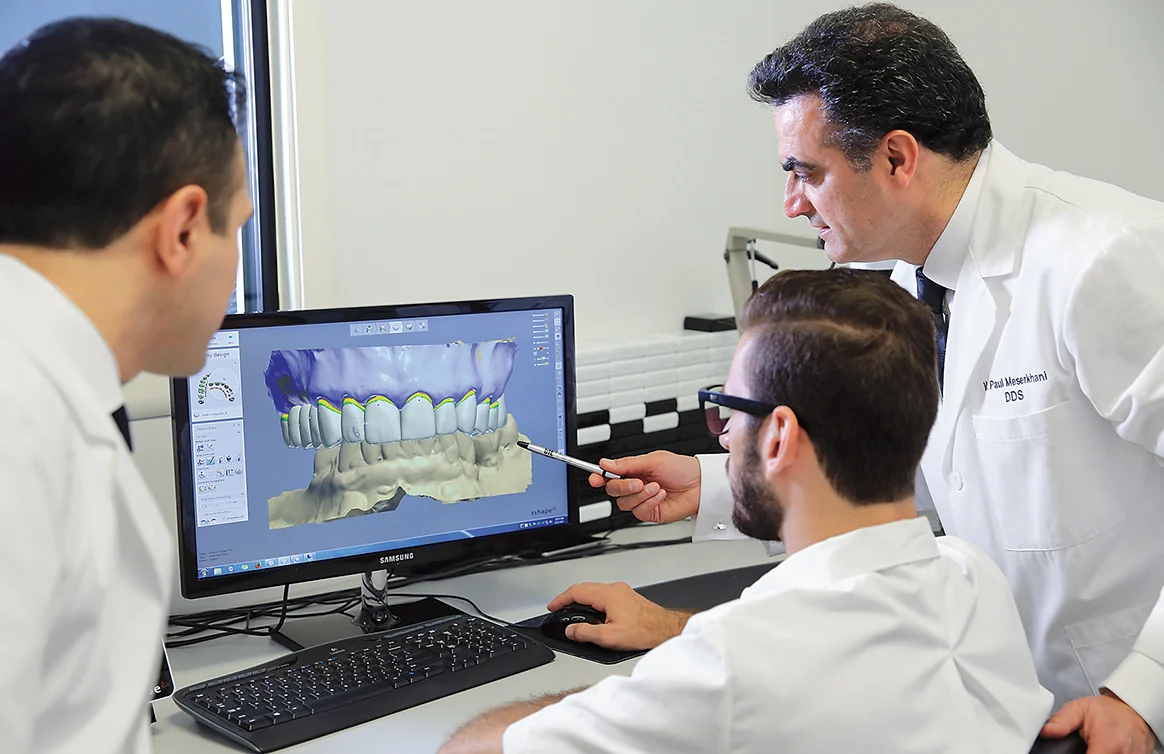
Our practice brings experienced general dentists, a prosthodontist and surgical specialists together under one roof. With advanced 3D imaging and an in-house dental lab, we coordinate your sinus augmentation, implant placement and final restoration as one connected plan. That means fewer referrals, clearer communication and results designed around how your new teeth will look and function from day one. We proudly serve patients from Glendale, Pasadena, Burbank and throughout the Los Angeles area.
Sinus Lift Questions From Our Patients
Does a sinus lift hurt?
The area is fully numbed with local anesthesia, so you should not feel pain during the procedure, and sedation is available if you feel anxious. Afterward, most patients report mild soreness and swelling for a few days that is easily managed with prescribed or over-the-counter pain relievers.
How long does a sinus bone graft take to heal?
Most grafts need four to nine months to mature into solid bone that can support an implant. The exact timeline depends on how much bone was added, the type of graft material used and your overall health.
Can I get my implant at the same visit as my sinus lift?
In some cases, yes. When enough existing bone is present to hold the implant steady, a crestal sinus lift and implant placement can often be completed together. If the bone is very thin, we let the graft heal first and place the implant at a later appointment.
Will a sinus lift change my breathing or cause sinus problems?
No. The graft sits beneath the sinus membrane rather than inside the airway, so it does not affect how you breathe. Some patients notice temporary congestion or slight nasal bleeding for a few days, which typically clears up on its own.
What should I avoid while I heal?
For roughly the first two weeks, avoid blowing your nose, sneezing with your mouth closed, using straws, smoking, heavy lifting and strenuous exercise. These steps protect the sinus membrane and keep the graft in place while it heals.
How will I know if I need a sinus lift before getting implants?
During your implant consultation, our team takes X-rays and 3D scans of your upper jaw. These images show the height and density of your bone and where your sinus sits, which tells us whether augmentation is needed before an implant can be placed.
How successful are implants placed after sinus augmentation?
Sinus augmentation is a well-established procedure with high success rates, and implants placed in grafted bone perform very similarly to implants in natural bone. Avoiding tobacco and carefully following aftercare instructions further improve your outcome.
Take the First Step Toward Stable Upper Implants
A consultation with our team will show whether you have enough bone for an implant today or would benefit from a sinus lift first. Call 818-242-4046 or request an appointment online with LA Dentists Group in Glendale to get a clear, personalized plan.